We're in beta! If you find a bug or have feedback, let us know in our

Parthenium biocontrol
Record observations of parthenium biocontrol agents and help implement parthenium biocontrol.
More Information
Parthenium hysterophorus
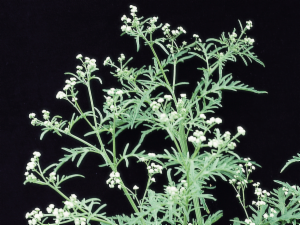
Parthenium weed
Parthenium is an annual herb, growing up to 1.5 meter tall and capable of producing up to 150, 000 seeds per mature plant. Seeds are long-lived in the soil. The weed causes severe health impacts on humans and livestock, is unpalatable to livestock and displaces native vegetation. Parthenium is designated a Weed of National Significance in Australia.
There are a range of management options available for parthenium, including weed hygiene, grazing management, herbicides and biological control. Biological control is considered an effective tool for managing large-scale parthenium infestations. Once established, the biological control agents continue to work in the background causing persistent stress on the weed. The combined effects of the biological control agents can dramatically reduce parthenium density and plant vigour, providing native and palatable grasses a competitive edge to outgrow the weed. Nine insects and two fungi have been released for parthenium, with several of these agents causing impressive damage to parthenium in most seasons.
- Leaf-feeding beetle Zygogramma bicolorata
- Seed-feeding weevil Smicronyx lutulentus
- Stem-galling moth Epiblema strenuana
- Stem-boring weevil Listronotus setosipennis
- Planthopper Stobaera concinna
- Leaf-mining moth Bucculatrix parthenica
- Stem-galling weevil Conotrachelus albocinereus
- Stem-boring moth Platphalonidia mystica
- Clearwing moth Carmenta ithacae
- Winter rust Puccinia abrupta var. partheniicola
- Summer rust Puccinia xanthii var. parthenii-hysterophorae
Research is continuing in an effort to optimise establishment and impact of these biological control agents across the parthenium-infested range in Australia.
Ticket Required: No
Minimum Age: 13
Languages: English