We're in beta! If you find a bug or have feedback, let us know in our

Map OpenSidewalks with AVIV ScoutRoute: Explore Your Community
Explore and map your community’s sidewalks and pedestrian spaces
In a specific area
- Ongoing
More Information
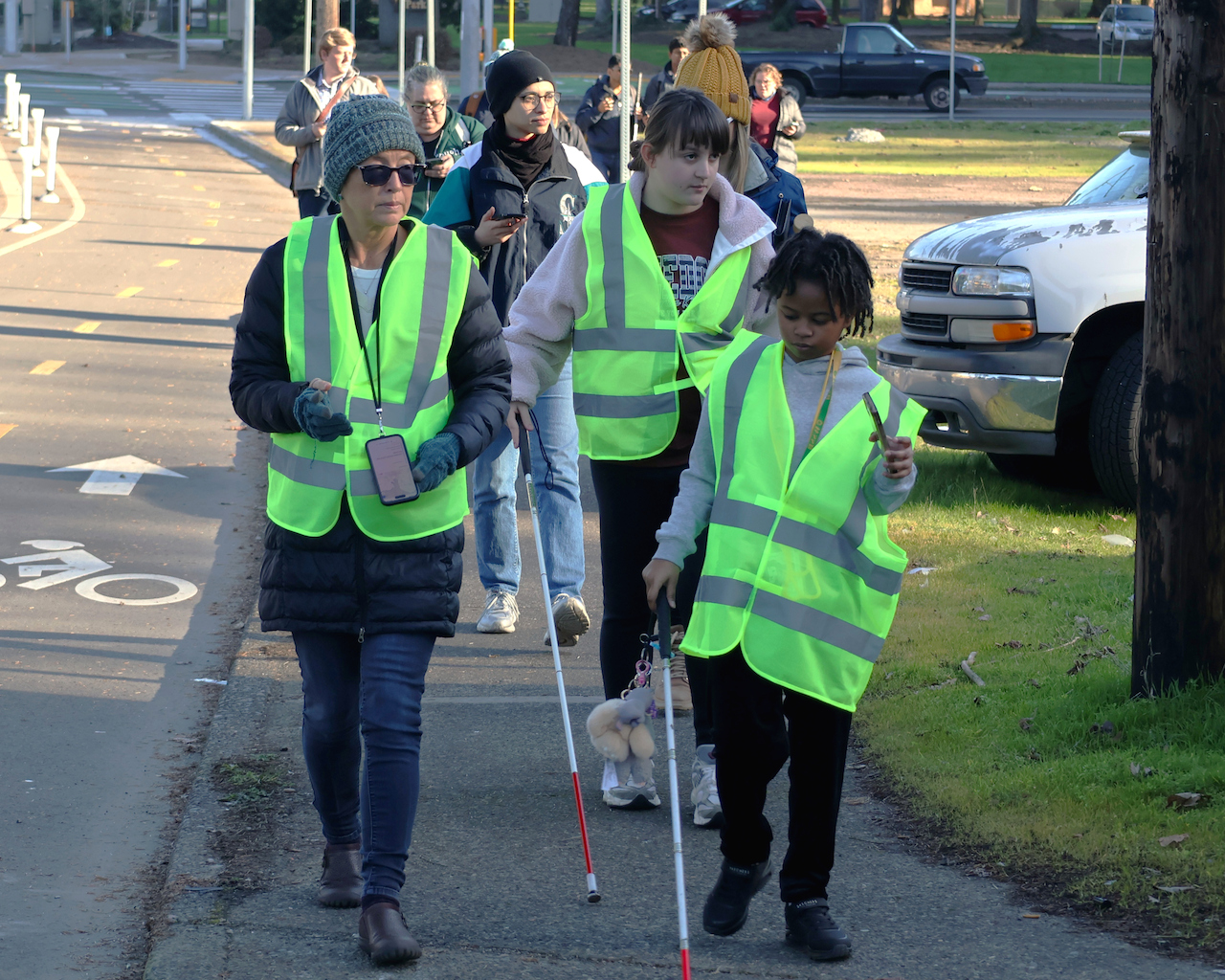
AVIV ScoutRoute is an outdoor community exploration project that helps young people notice, document, and think more deeply about the places they move through every day. Using guided mobile quests, participants walk or roll through their neighborhoods and record features such as sidewalks, crossings, curb ramps, and bus stops.
The project is designed to get participants outdoors and help them engage with their communities in a hands-on way. Instead of seeing streets, sidewalks, and transit stops as background infrastructure, participants learn to see them as part of the shape and feel of a place: what makes a route welcoming, what makes it difficult, and how public spaces support or limit community life.
As participants complete quests, they build observation skills and contribute useful information about local walking and transit environments. They might document whether a sidewalk is wide and comfortable, whether a curb ramp is usable, or whether a bus stop feels like a place people can safely and comfortably reach. These observations help connect placemaking, accessibility, and everyday experience.
AVIV ScoutRoute is well suited for classrooms, youth groups, families, libraries, camps, and community organizations. It offers a way for young people to spend time outside, learn from the built environment around them, and contribute to a better understanding of how neighborhoods work for different kinds of people.
At its core, this project is about helping participants see their own communities differently: not just as places they pass through, but as places they can observe, understand, care for, and help improve.
Ticket Required: No
Minimum Age: 13
Languages: English